Australia bid to take on China’s dominance in rare earth metals
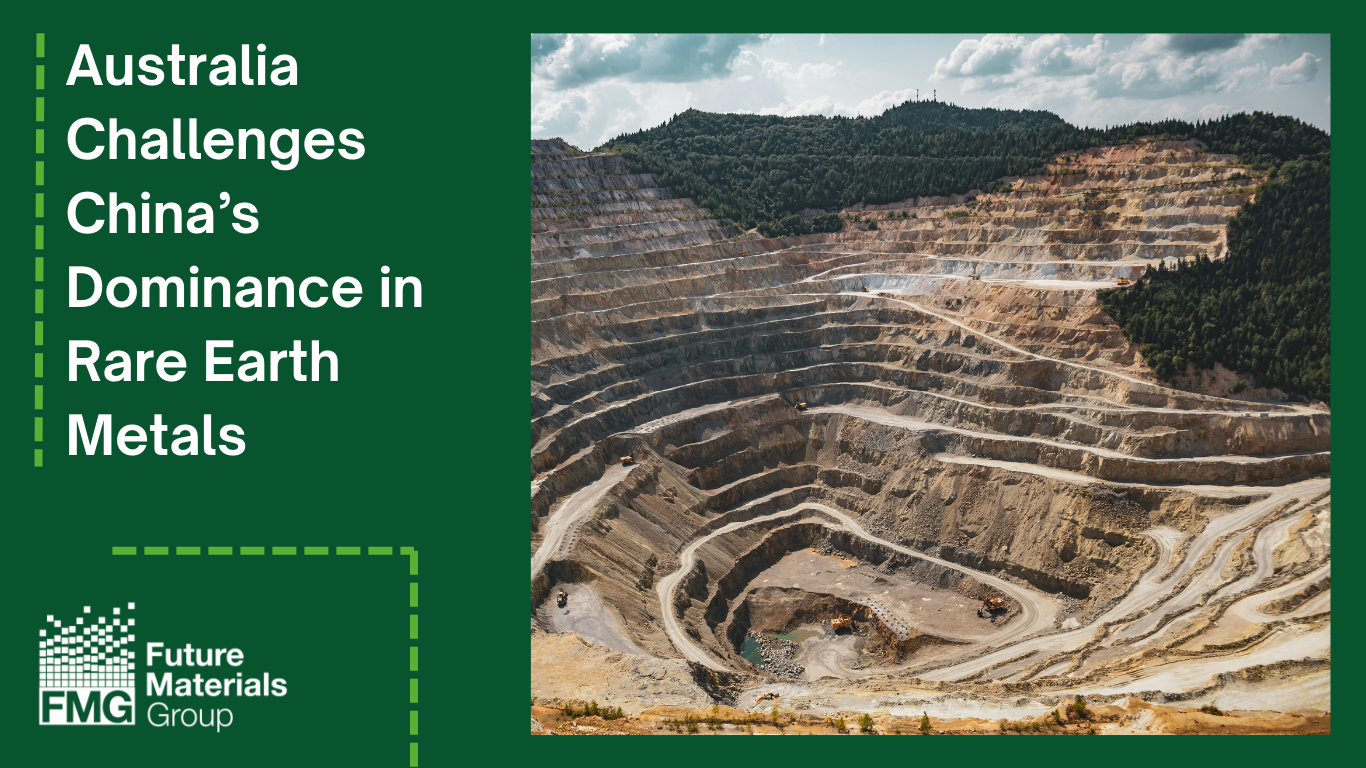
Magda Godzina presents FMG’s insights into developments in the rare earth metals supply chain; an area that is intrinsically linked to advanced materials usage.
Three hours north of Perth, Iluka Resources sits on a one-million-tonne rare earth stockpile worth more than $650m. Long a by-product of its zircon operations, these minerals, including prized dysprosium and terbium, are critical for electric vehicles, wind turbines, and defence systems. But their real value lies in supply chain security: today, China mines more than half of the world’s rare earths and controls almost 90% of processing, leaving the West dangerously dependent.
To change that equation, Canberra has extended a A$1.65bn ($1bn) loan to Iluka to build Australia’s first integrated rare earth refinery. Due online in two years, the facility could supply a “significant proportion of Western demand by 2030,” according to Iluka’s head of rare earths, Dan McGrath. Global demand is projected to rise between 50% and 170% this decade.
Strategically, the move responds to Beijing’s history of weaponizing rare earths. Export curbs during U.S.-China trade tensions forced automakers like Ford to halt production, exposing just how fragile supply chains had become. “The open international market in critical minerals is a mirage,” said Resources Minister Madeleine King, arguing that government intervention is essential to develop a competitive alternative.
Yet challenges loom. Rare earths are chemically difficult to separate, with processing generating toxic and sometimes radioactive waste. China’s dominance was built partly on lax environmental standards; Australia insists its legal framework will ensure cleaner, more responsible refining.
For the EU, U.S. and Japan, all heavily reliant on Chinese supply, Australia’s push represents more than an industrial gamble: it is a strategic necessity. If successful, Iluka’s refinery could mark the first step in reshaping a $20bn global market long monopolised by Beijing, positioning Australia as the West’s independent and sustainable source of critical minerals.
Recent articles
Inside the Cambium acquisition of SHD Composites – FMG’s Berthold Alfes panel interview with JEC
Earlier this year, FMG acted as exclusive sell-side advisor on the sale of SHD Composites to Cambium. At JEC World 2026, FMG's Director Berthold Alfes joined Nigel Blatherwick, Group Commercial Director at SHD Composites, and [...]

FMG welcomes new manager Dr. Jon Edgeworth
Jon has joined FMG as Manager of the Consulting Team. In this role, he leads team coordination and development while helping client organisations achieve their strategic goals. Before joining FMG, Jon spent 14 years in [...]

UK Government and Google DeepMind form a new strategic partnership
A strategic UK partnership The partnership between the UK government and Google DeepMind to establish an AI-driven materials discovery laboratory has been received as a scientific milestone. It is that, but it also has the [...]