
Carbon fibre supply and demand: Key insights from the CW carbon fibre event series
Recently, FMG’s Dr. Myriam Yagoubi, manager at Future Materials Group, presented a high-level overview of the global carbon fibre market at the Carbon Fiber Event Series presented by CompositesWorld, offering FMG’s view and insights of where supply and demand stand today and how both are expected to evolve through 2030.
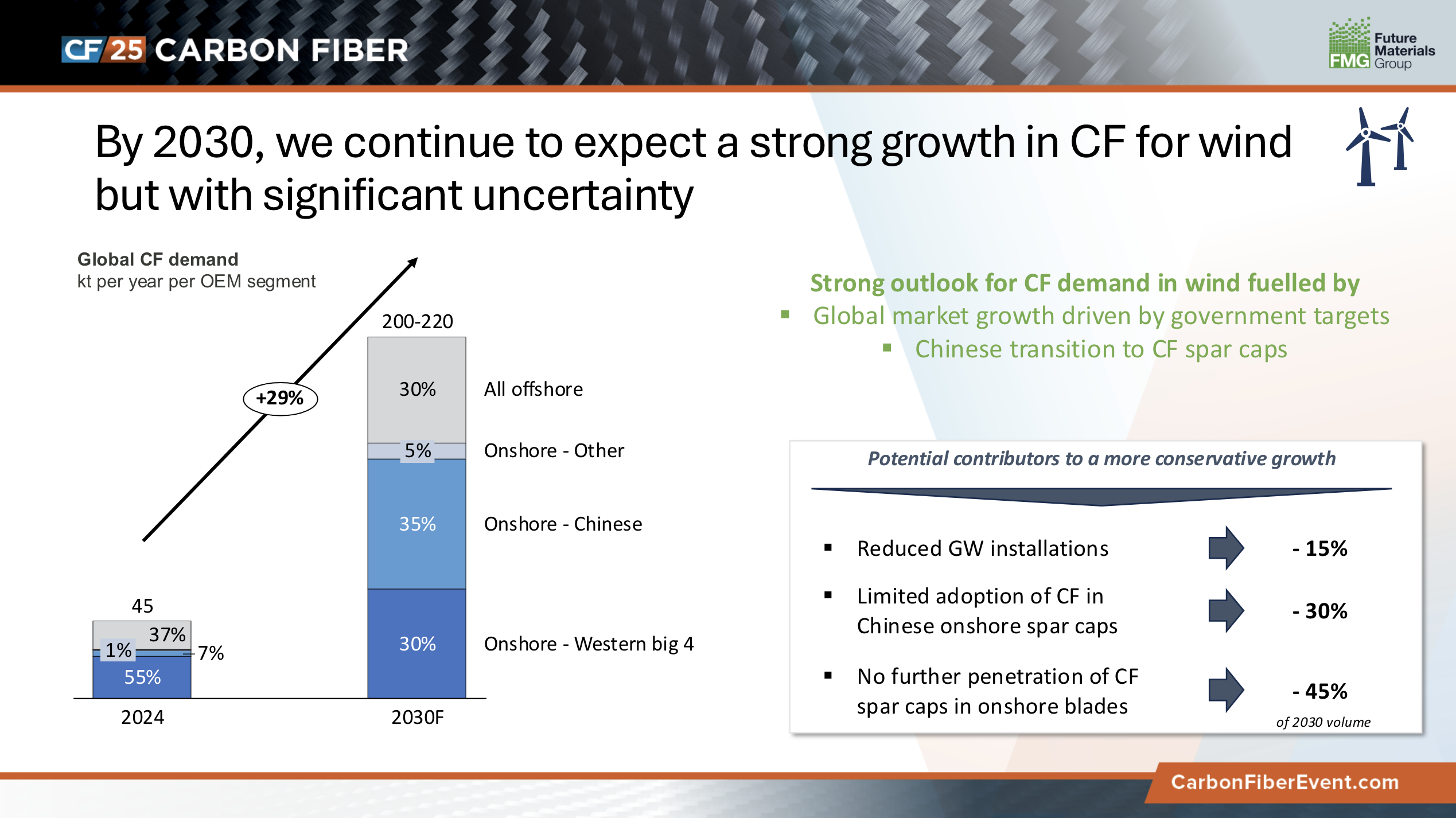
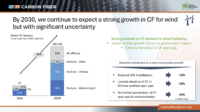
On the demand side, carbon fibre consumption is forecast to grow strongly through the decade, with wind energy emerging as the dominant driver by a considerable margin. The accelerating adoption of carbon fibre spar caps by wind turbine manufacturers, particularly in China, combined with ambitious global installation targets, points to rapid demand growth in this segment. That said, FMG highlighted meaningful uncertainty around timing and scale, with the pace of Chinese onshore adoption and overall installation rates acting as key variables. Aerospace demand is recovering steadily, supported by the return of commercial aviation and growing military spend, though the outlook is unlikely to be boosted by any step-change programme before 2030. Both Airbus and Boeing have stated that new aircraft development is ongoing, however, they won’t be entering service until the mid-2030s. General industrial applications can be divided into two main areas. Namely, established long time applications, and larger more conservative applications such as construction. While the more established end-markets continue to grow at a steady pace and already have a high penetration of composites, areas such as construction are less established and thus have a larger opportunity for the introduction of more composites but such adoption is slow.
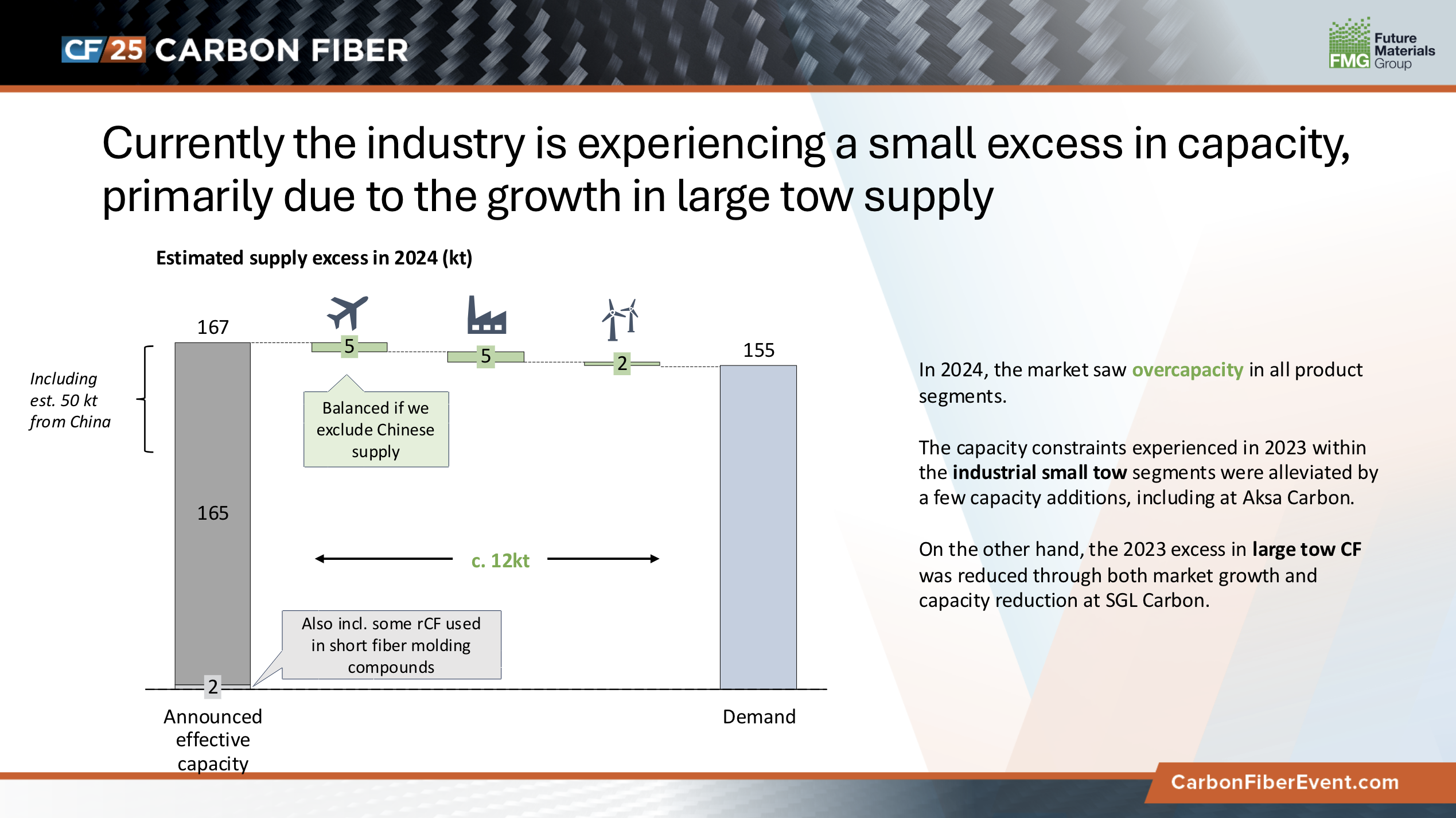
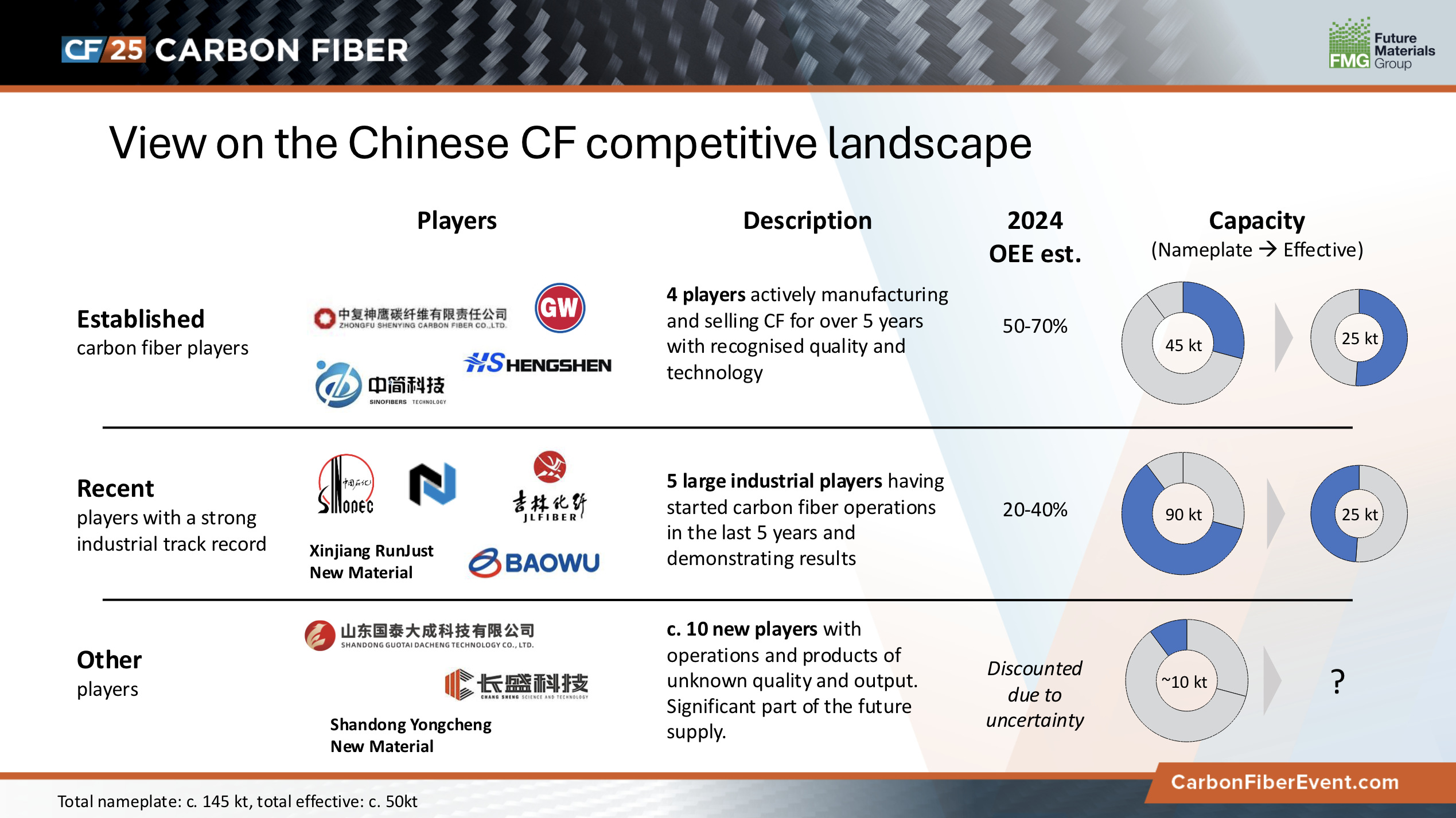
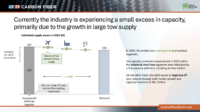
On the supply side, the rapid expansion in global nameplate capacity, largely led by Chinese producers, is a key driver of market dynamics. However, the gap between nameplate and effective capacity is also a central to the understanding of the supply situation to date. While Chinese producers now account for nearly half of the global nameplate capacity, their actual output relative to that installed base remains somewhat lower today than that of established Western and Japanese players, although the gap is narrowing. Operational efficiency, material quality, and qualification requirements mean that a share of installed capacity does not fully translate into usable supply, particularly for high-performance applications. This distinction between nominal and effective supply is essential to understanding real market conditions. The supplier landscape is also in flux: some established players are scaling back or exiting large tow production, while others are repositioning towards higher-value speciality grades. New capacity announcements, predominantly from Chinese producers, are substantial on paper, but their realisation and performance consistency can vary across players.
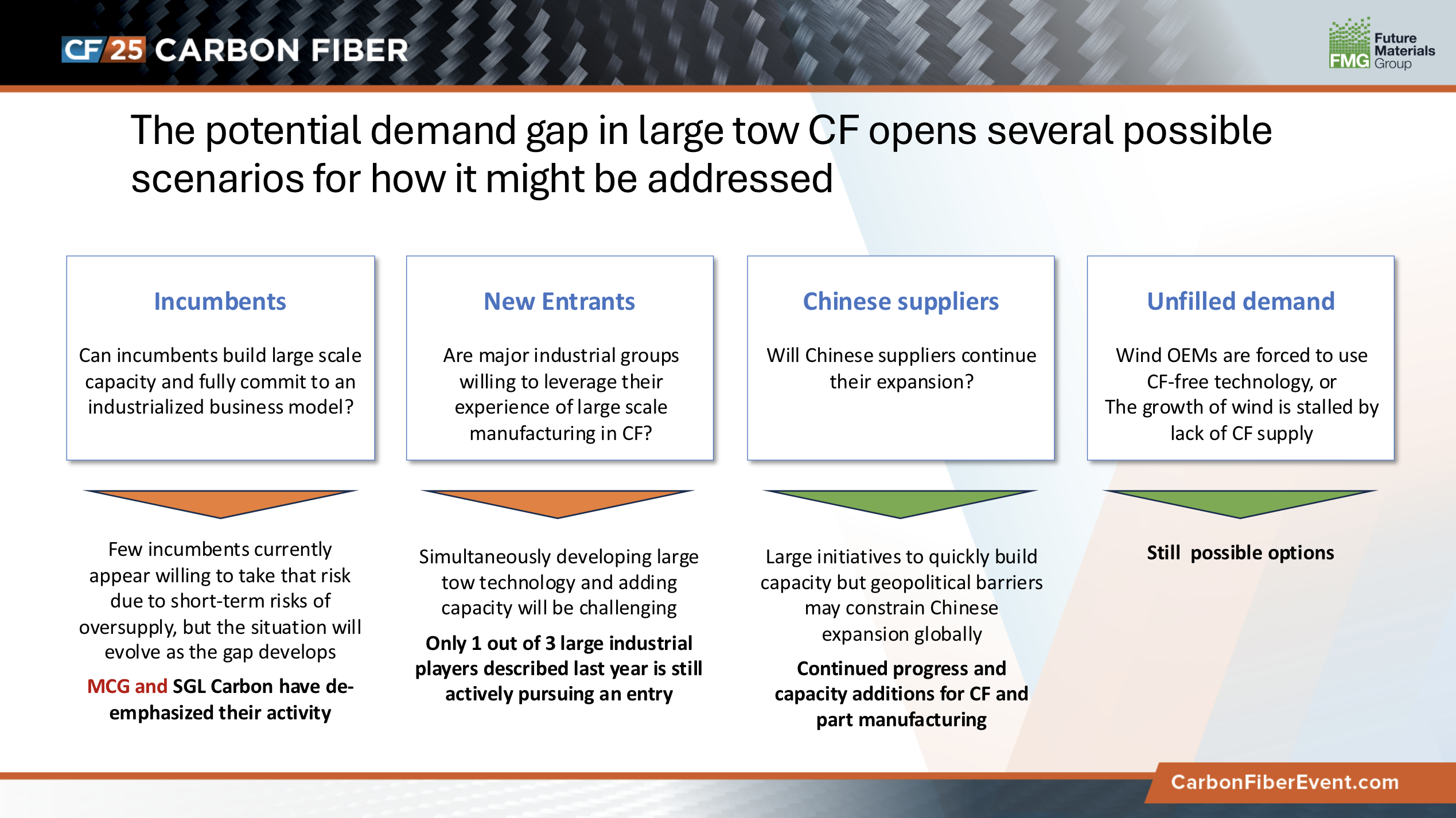
Looking ahead to 2030, the market faces a meaningful potential supply gap, driven overwhelmingly by the scale of projected wind energy demand for large tow carbon fibre. Aerospace-grade supply is relatively well-matched to expected demand, and industrial small tow faces only a moderate shortfall, with some risk of overcapacity if Chinese capacity additions materialise as announced. It is in large tow where the greatest structural risk lies, and where the path to closing the gap remains unclear. Incumbent producers have been cautious about committing capital becase of the extreme competitiveness of that market and the associated risks. Furthermore, Several key players have strategically deprioritised this segment, reflecting FMG’s insight that persistent economic pressures and wind-industry supply chain constraints have materially weakened its near-term viability. If supply does not keep pace with demand, wind manufacturers could be forced to rethink their material choices or face constraints on growth.
For FMG, a clear-eyed understanding of the supply-demand outlook at a segment level is a crucial first step to navigating the carbon fibre market through 2030 and beyond. In addition, industry players will also need to assess evolving market trends, as well as value chain and regional dynamics to be successful in this complex market place.
Recent articles


Carbon fibre supply and demand: Key insights from the CW carbon fibre event series
Recently, FMG’s Dr. Myriam Yagoubi, manager at Future Materials Group, presented a high-level overview of the global carbon fibre market at the Carbon Fiber Event Series presented by CompositesWorld, offering FMG’s view and insights of [...]

FMG’s Myriam Yagoubi to open CompositeWorld’s Carbon Fiber Event Series in a week’s time
With one week to go, the Carbon Fiber Event Series Presented by CW is set to open with a timely discussion on the state of the carbon fiber market. The series runs from January 28 [...]


Future Materials Group’s Jon Stowell presents at JEC Composites Talks India 2025
Mumbai, India – 11th December 2025 – Future Material Group’s (FMG) Senior Director, Jon Stowell, recently presented at JEC Composites Talks India 2025. The event brought together industry leaders from across the advanced materials industry for [...]